
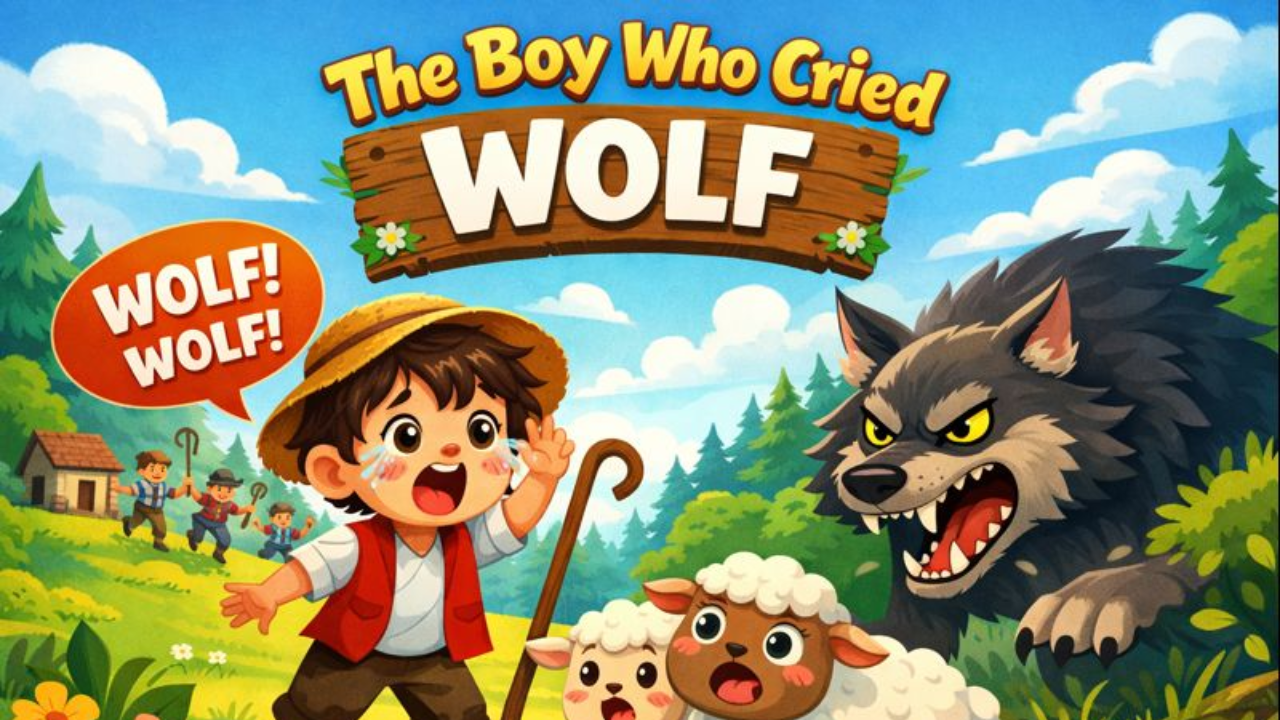
Stories have always played a powerful role in shaping values, especially for children. Among the many classic moral tales passed down through generations, “The Boy Who Cried Wolf” stands out as one of the most impactful and relevant even today. Though simple in narration, this story carries a deep lesson about honesty, trust, and responsibility—values that are just as important in the modern world as they were centuries ago.
This detailed blog explores the story of The Boy Who Cried Wolf, its full narrative, moral meaning, psychological lessons, relevance in today’s society, and why it remains essential reading for children and adults alike.
The Story of The Boy Who Cried Wolf
Once upon a time, there lived a young shepherd boy in a small village. His job was to take the village sheep to the nearby hills to graze and to protect them from wild animals, especially wolves. Every day, the villagers trusted the boy to watch over their sheep carefully.
However, life on the hills was lonely and boring for the boy. There was little to do except watch the sheep eat grass. After a while, he began to feel restless and sought entertainment.
One day, an idea came to his mind.
To amuse himself, the boy suddenly shouted,
“Wolf! Wolf! A wolf is attacking the sheep!”
Hearing his cries, the villagers immediately dropped their work and ran up the hill with sticks and tools to chase away the wolf. When they reached the boy, they found no wolf at all. Instead, the boy burst out laughing at their worried faces.
Angry and annoyed, the villagers warned him,
“Do not cry wolf when there is no danger. One day, no one will believe you.”
The villagers returned to their work, shaking their heads.
A few days later, the boy played the same trick again. He shouted even louder,
“Wolf! Wolf! Please help!”
Once again, the villagers rushed to the hill. And once again, there was no wolf. The boy laughed even harder this time. The villagers were furious. They scolded him and left, vowing not to trust him again.
Some days later, a real wolf came quietly out of the forest. It began attacking the sheep. Terrified, the boy screamed with all his strength,
“Wolf! Wolf! Please help me!”
But this time, no one came.
The villagers heard the boy’s cries but thought he was lying again. They ignored him. The wolf killed several sheep and ran away. The boy sat on the hill, crying bitterly and filled with regret.
He had learned his lesson—but it was too late.
Moral of the Story
“A liar is not believed even when he speaks the truth.”
This simple moral teaches children that honesty is the foundation of trust, and once trust is broken, it is very difficult to regain.
Deeper Meaning and Life Lessons
1. The Importance of Honesty
The boy lied for fun, without thinking about the consequences. At first, his lies seemed harmless. But eventually, those lies caused real damage—not only to him but also to others. Honesty builds credibility, and credibility builds trust.
2. Trust Is Hard to Earn, Easy to Lose
The villagers trusted the boy initially. But repeated lies destroyed that trust. This teaches children that trust is precious. Once lost, even the truth may be ignored.
3. Actions Have Consequences
The boy’s actions led directly to the loss of sheep and his own humiliation. This story helps children understand that every action—good or bad—has consequences.
4. Responsibility Comes with Duty
The boy was given responsibility over the sheep. Instead of taking it seriously, he misused it. This highlights the importance of being responsible when others depend on us.
Why This Story Is Still Relevant Today
Even in today’s digital world, The Boy Who Cried Wolf remains highly relevant.
In School Life
Children who frequently lie or exaggerate may not be believed by teachers or classmates, even when they are telling the truth.
In Social Media & News
Fake news, clickbait headlines, and misinformation work just like the boy’s false cries. When real emergencies happen, people may ignore them due to past false alarms.
In Personal Relationships
Constant lying damages friendships, family bonds, and professional relationships. Trust, once broken, takes time and effort to rebuild.
Psychological Insight for Children
This story helps children develop:
- Moral reasoning
- Emotional intelligence
- Understanding of social trust
It encourages children to think before speaking and to understand how their words affect others.
How Parents and Teachers Can Use This Story
Discussion Questions
- Why did the boy lie?
- How did the villagers feel after being tricked?
- What could the boy have done differently?
- Have you ever lost trust because of a lie?
Activities
- Role-play honesty vs lying scenarios
- Write a different ending to the story
- Draw pictures showing the moral
These activities help reinforce the lesson in an engaging way.
Variations of the Story Across Cultures
Though best known from Aesop’s Fables, versions of The Boy Who Cried Wolf exist in many cultures, proving that the lesson of honesty is universal. Some versions replace the wolf with other dangers, but the core message remains unchanged.
Key Takeaways
- Lies may seem fun or harmless at first, but they can cause serious harm.
- Trust is one of the most valuable qualities a person can have.
- Honesty protects relationships and builds respect.
- Learning from mistakes early prevents bigger problems later.
Conclusion
The Boy Who Cried Wolf is more than just a children’s story—it is a lifelong lesson wrapped in a simple tale. It teaches us that honesty is not optional; it is essential. In a world filled with noise, exaggeration, and misinformation, this age-old story reminds us that truth is powerful only when people trust the speaker.
Teaching this story to children helps shape them into responsible, truthful, and trustworthy individuals. And for adults, it serves as a reminder that credibility is earned through consistent honesty.