
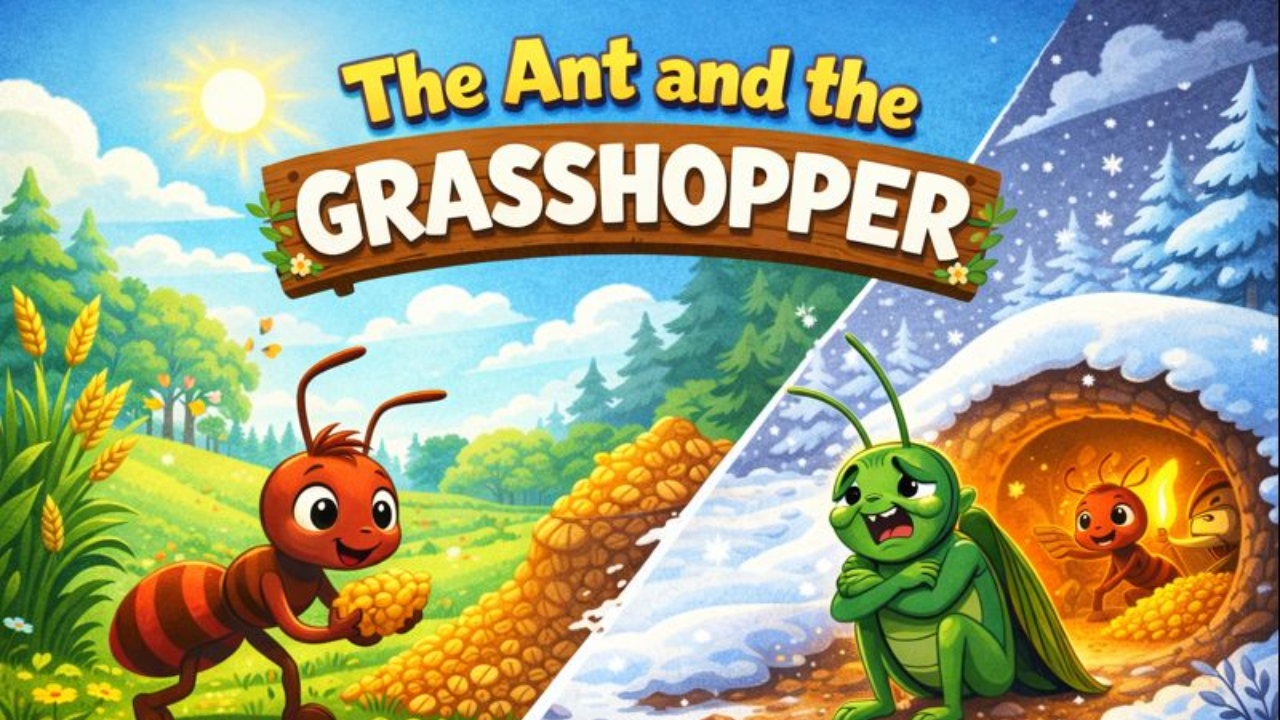
Stories have always been one of the best ways to teach children important values in a simple and memorable way. Among the many timeless fables told across generations, “The Ant and the Grasshopper” is one of the most well-known and meaningful moral stories. Though it appears simple on the surface, this short tale carries a powerful message about hard work, planning, responsibility, and the consequences of laziness.
This story is especially popular among children, parents, and teachers because it clearly shows how our choices today shape our future. In this detailed blog article, we will explore the full story of The Ant and the Grasshopper, its moral lesson, deeper meaning, relevance in modern life, and how it helps shape strong character values in children.
The Story of The Ant and the Grasshopper
Once upon a time, on a bright summer day, an ant and a grasshopper lived in a green meadow near a field. The sun was shining, flowers were blooming, and food was plentiful.
The ant was very busy. Every day, from morning till evening, it worked hard. It collected grains of wheat and rice from the fields and carried them back to its home. The work was tiring, but the ant did not complain. It knew that summer would not last forever.
Nearby, the grasshopper was having a wonderful time. Instead of working, it sang songs, played music, and jumped happily from leaf to leaf. Whenever it saw the ant working, it laughed and said,
“Why are you working so hard? Come and sing with me! Enjoy the summer!”
The ant replied calmly,
“I am storing food for winter. When cold days come, there will be no food to find.”
The grasshopper laughed and said,
“Winter is far away! Why worry now? There is plenty of food everywhere.”
And so, the grasshopper continued to sing and play all day long, while the ant continued to work.
Soon, summer passed, and winter arrived.
The days became cold, and the ground was covered with snow. There were no leaves, no flowers, and no food anywhere. The grasshopper was hungry and weak. It had no food because it had not saved anything during summer.
Shivering in the cold, the grasshopper went to the ant’s house and knocked on the door.
“Please help me,” begged the grasshopper. “I am hungry and cold.”
The ant looked at the grasshopper and said,
“What were you doing all summer when I was working?”
The grasshopper replied sadly,
“I was singing and playing. I did not think about winter.”
The ant felt sorry but said,
“If you had worked then, you would not suffer now.”
The ant shared a little food, but the grasshopper had learned a hard lesson.
Moral of the Story
“Work today so you can live comfortably tomorrow.”
Another common moral is:
“Hard work and planning lead to success, while laziness brings regret.”
Deeper Meaning of the Story
Though the story is short, it carries deep lessons that apply to real life.
1. Importance of Hard Work
The ant represents discipline and dedication. It works consistently, even when conditions are comfortable. This teaches children that success does not come from luck but from effort.
2. Planning for the Future
The ant plans ahead, knowing that seasons change. The grasshopper lives only in the present. The story teaches children the importance of preparing for future challenges.
3. Consequences of Laziness
The grasshopper’s carefree life seems fun at first, but it leads to suffering later. This shows that avoiding responsibility may feel easy, but it often brings problems later.
4. Balance Between Work and Fun
While the ant works too much and the grasshopper plays too much, the story encourages balance. Children learn that fun is important—but work should never be ignored.
Why This Story Is Still Relevant Today
Even though this fable is very old, its message is still important in today’s world.
In School Life
Students who study regularly and complete homework on time are like the ant. Those who delay work and rely on last-minute effort often struggle, like the grasshopper.
In Adult Life
Adults who save money, plan careers, and work hard enjoy security in the future. Those who avoid responsibility may face difficulties later.
In Modern Society
The story reminds us about:
- Saving money
- Preparing for exams
- Building skills early
- Managing time wisely
Psychological Lessons for Children
This story helps children develop:
- Self-discipline
- Patience
- Responsibility
- Long-term thinking
It gently teaches that actions have results, without using fear or punishment.
How Parents and Teachers Can Use This Story
Discussion Questions
- Why did the ant work so hard?
- What mistake did the grasshopper make?
- What would you do differently if you were the grasshopper?
- Is it important to both work and play?
Activities
- Draw the ant and grasshopper in summer and winter
- Make a “work vs play” chart
- Write a new ending where the grasshopper learns early
These activities help children understand the lesson better.
Different Versions of the Story
Some versions show the ant sharing food kindly, teaching compassion. Others focus more on strict consequences. No matter the version, the main lesson remains the same: preparation and hard work matter.
Key Takeaways
- Work hard when you have the chance
- Plan ahead for difficult times
- Enjoy fun, but never ignore responsibilities
- Learning early prevents regret later
Conclusion
The Ant and the Grasshopper is more than just a children’s story—it is a lesson for life. It teaches us that success is built step by step through hard work, planning, and patience. While enjoying life is important, ignoring responsibility can lead to hardship.
For children, this story builds strong values early. For adults, it serves as a reminder to stay disciplined and prepared. That is why this simple fable continues to be taught and loved across generations.