A Famous Panchatantra Moral Story for Kids
The Panchatantra story of The Brahmin’s Dream is a beautiful and meaningful tale from ancient Indian culture. This story teaches children an important lesson about daydreaming, greed, patience, and staying grounded in reality.
Stories are one of the best ways to teach children good values. Kids learn faster through stories, and the lessons stay in their minds for a long time. This short moral story for kids shows how dreaming too much without action can make us lose even what we already have.
Let us read the story of the poor Brahmin and his dream and understand its simple yet powerful message.
The Story of the Brahmin’s Dream
(A Panchatantra Tale)
Long ago, in a small village, there lived a poor Brahmin named Swabhavakripna. He lived all alone and had no family, friends, or relatives. The Brahmin was known to be very stingy and lived a simple life by begging for food.
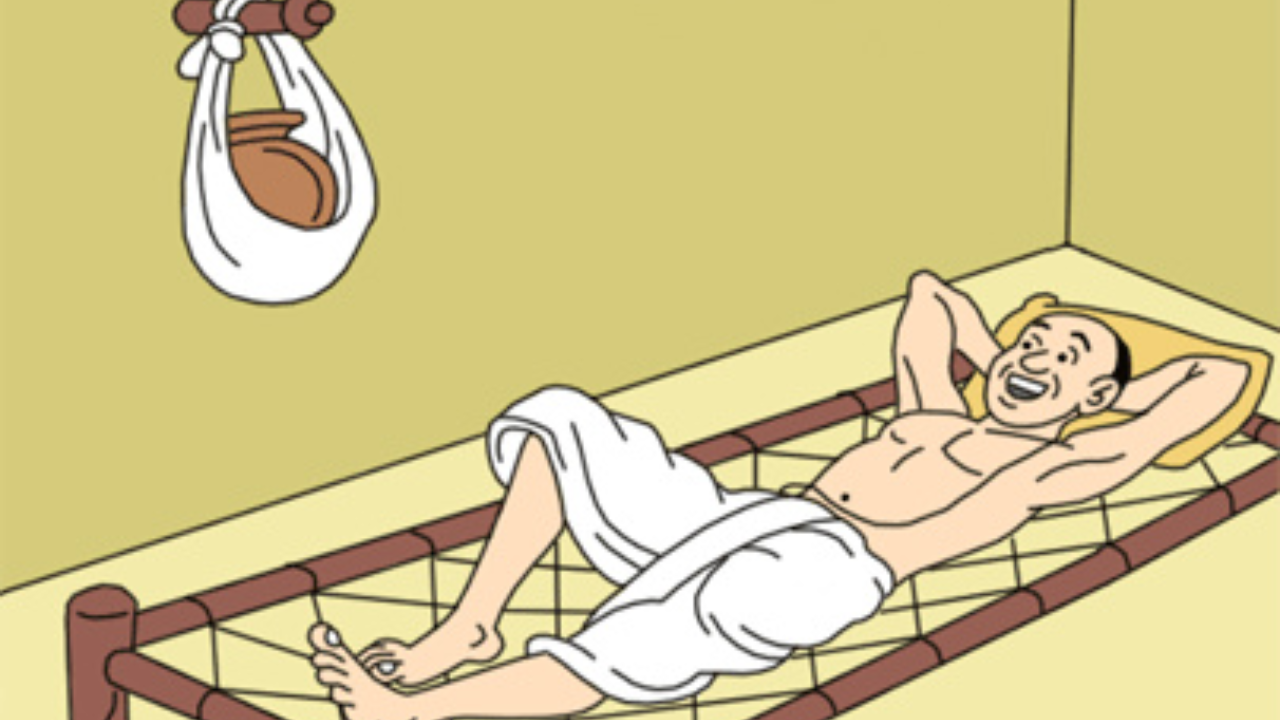
Whatever food he received as alms, he never wasted it. He carefully saved the leftover food in an earthen pot and hung it near his bed. Whenever he felt hungry, he would take a little food from the pot and eat it.
A Pot Full of Hope
One day, the Brahmin received a large quantity of rice gruel as alms. After eating to his full, there was still a pot full of rice left.
The Brahmin felt very happy.
“This food will last me many days,” he thought with joy.
As night fell, he lay down on his bed. But his eyes were fixed on the earthen pot hanging beside him. Soon, he fell asleep—and began to dream.
The Brahmin’s Big Dream
In his dream, the pot of rice gruel began to overflow.
He thought,
“If there is a famine in the land, I can sell this rice for one hundred silver coins!”
With that money, he imagined buying two goats.
The goats would have baby goats every six months. Soon, he would own many goats.
Then he would sell the goats and buy cows and buffaloes.
They would give milk. He would sell milk, make curd and butter, and earn even more money.
Slowly, in his dream, the poor Brahmin became very rich and successful.
A Dream Family
In his imagination, he built a big house with four rooms.
A wealthy Brahmin would marry his daughter to him.
Soon, his wife would give birth to a son.
“I will name him Soma Sharma,” he thought proudly.
But the child would be naughty and noisy.
The Brahmin imagined scolding his son again and again.
When the boy did not listen, the Brahmin angrily thought,
“I will hit him with a stick!”
Dreams Come Crashing Down
Lost in his dream, the Brahmin suddenly picked up the stick lying near his bed and swung it in the air.
CRASH!
The stick hit the earthen pot hanging beside him.
The pot broke into pieces, and all the rice gruel spilled over his body and the floor.
The Brahmin woke up with a shock.
He looked around and realized that everything was just a dream.
His rice was gone.
His dreams were broken.
He was poor again—with even less than before.
Moral of the Story
Moral:
Do not build castles in the air.
Summary of The Brahmin’s Dream Story
This Panchatantra moral story for kids teaches us that:
- Dreaming is natural
- But dreaming without action is harmful
- Greed and daydreaming can make us careless
- We should value what we already have
The poor Brahmin lost his food because he was lost in unrealistic dreams instead of focusing on reality.
What Children Learn from This Story
- Importance of staying grounded
- Difference between dreams and reality
- Avoid greed and false hopes
- Focus on hard work, not imagination
FAQs on The Brahmin’s Dream
1. Is dreaming good or bad?
Dreaming is not bad, but believing that dreams will come true without effort is wrong.
2. Why did the Brahmin scold his child in the dream?
Because he imagined himself as a rich father and forgot that it was only a dream.
3. What is the lesson from the story?
We should not imagine success without working for it and must live in reality.
Final Thought
The Brahmin’s Dream is a timeless Panchatantra story for kids that teaches a powerful life lesson in a simple way. Children enjoy the story and learn to balance dreams with reality—making it perfect for school reading, moral lessons, essays, and worksheets.