
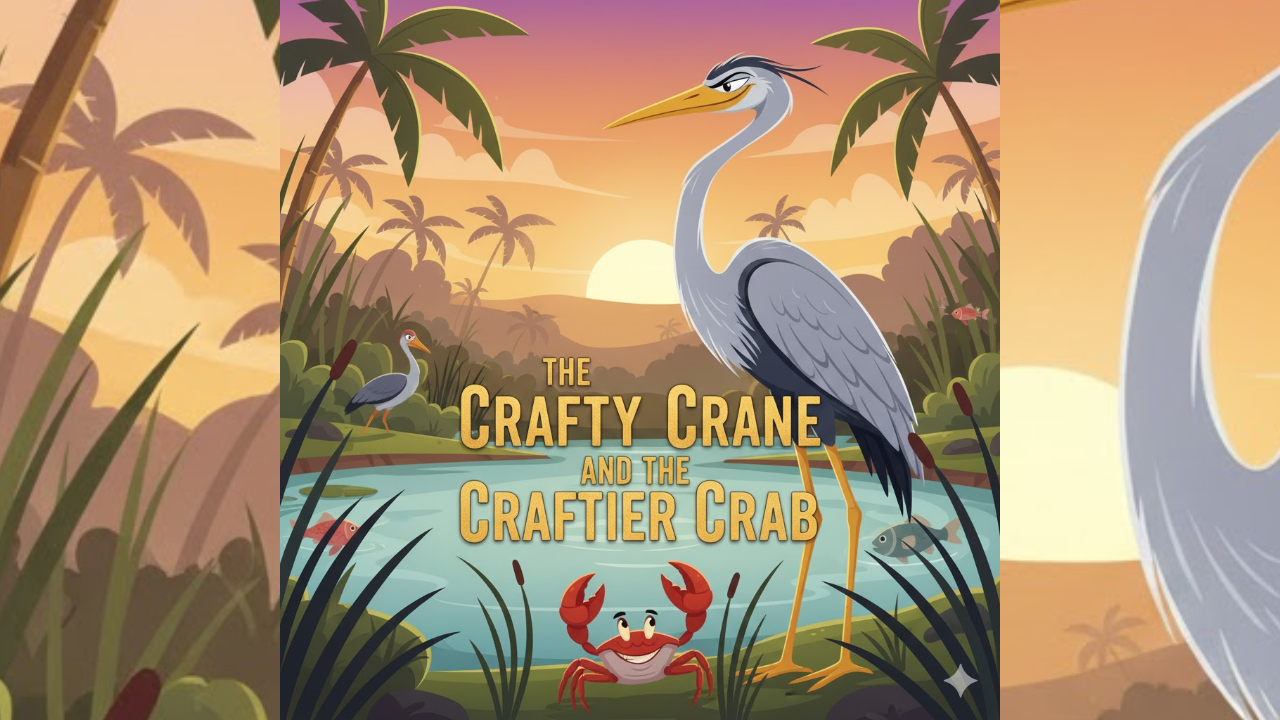
Long ago, near a peaceful village, there lay a vast and beautiful lake. The lake was rich with life and filled with sparkling water, colorful fish, frogs, snails, and many other water creatures. Tall trees surrounded the lake, providing shade and shelter to birds and animals alike.
Among them lived a crane, also known as a heron. For many years, the crane had enjoyed an easy life. Every day, he would stand patiently at the edge of the lake and catch fish without much effort. The lake had always provided him with more food than he needed.
However, time does not spare anyone.
As the years passed, the crane grew old and weak. His legs trembled, his eyesight faded, and his once-sharp beak could no longer strike swiftly. Catching fish became harder with each passing day. Gradually, hunger began to haunt him. His body became thin, and his feathers lost their shine.
One day, after failing yet again to catch even a single fish, the crane sat silently near the lake, exhausted and starving. Desperation filled his mind.
“I cannot survive like this,” he thought.
“If I don’t find food soon, I will surely die.”
Instead of accepting his fate honestly, the crane chose a darker path. His mind, once patient and calm, now turned cunning and deceitful. He began to think of a plan to trick the innocent creatures of the lake.
The next morning, the crane stood at the edge of the lake in full view of everyone. But instead of fishing, he lowered his head and began to weep loudly. Tears rolled down his eyes, and he let out deep sighs, pretending to be filled with sorrow.
The fish, frogs, and other animals were surprised.
“Why is the crane crying?” they whispered among themselves.
“He has never behaved like this before.”
A crab, who was known for his sharp mind and cautious nature, slowly approached the crane.
“Uncle,” the crab asked gently,
“why are you crying instead of catching fish? Are you unwell?”
The crane wiped his tears and spoke in a weak voice, pretending to be noble.
“My child,” he said,
“I have decided to give up all worldly desires. I will no longer eat fish. I have taken a vow to fast until death.”
The crab was puzzled.
“If you have renounced worldly life,” he asked,
“then why are you crying so bitterly?”
The crane sighed deeply and replied,
“I am not crying for myself, my child. I am crying for all of you. This lake, which has been our home for generations, is soon going to dry up.”
The crab was shocked.
“Dry up?” he exclaimed.
“How can that be?”
The crane nodded gravely.
“Yes,” he said.
“I heard this from a great astrologer. He predicted that there will be no rainfall for the next twelve years. Without rain, this lake will soon disappear. All the fish and creatures living here will perish.”
Fear spread quickly through the lake. The fish panicked, the frogs croaked nervously, and whispers of worry filled the water.
“What will we do?”
“Where will we go?”
“Is there any way to survive?”
Seeing their fear, the crane pretended to be kind and wise.
“There is a solution,” he said slowly.
“Not far from here, there is another large lake filled with clean water and plenty of food. If I carry you there one by one, I can save your lives.”
The creatures trusted him completely. After all, the crane looked weak, old, and sincere.
One by one, the fish agreed.
Each day, the crane would pick up a fish in his beak, fly away, and return alone. He told the others that he had safely dropped the fish into the new lake.
In reality, the crane flew to a nearby rock, ate the fish, and threw their bones aside. His hunger was finally satisfied, and his strength slowly returned.
Days passed, and many fish disappeared from the lake.
One day, the crab noticed something strange.
“So many fish have gone,” he thought,
“yet the crane always returns alone.”
Suspicion grew in his mind. Unlike the others, the crab was not easily fooled.
“Uncle,” the crab said politely one day,
“you have been so kind to everyone. Please take me as well to the new lake.”
The crane hesitated for a moment but agreed, thinking the crab was harmless.
He picked up the crab in his beak and began flying. From above, the crab noticed a pile of fish bones lying near a rock.
“Uncle,” the crab asked calmly,
“what is that pile below?”
The crane realized too late that his secret had been exposed.
In a flash, the crab used his strong claws and grabbed the crane’s neck tightly.
“You deceiver!” the crab shouted.
“You lied to everyone and ate them!”
The crane struggled, but the crab’s grip was firm. Within moments, the crane fell lifeless.
The crab then returned safely to the lake and told the remaining creatures the truth. The lake was saved from further destruction, and the animals learned a valuable lesson.
Moral of the Story
Intelligence and awareness defeat deception.
Those who misuse cleverness for selfish gain are eventually destroyed by someone wiser.